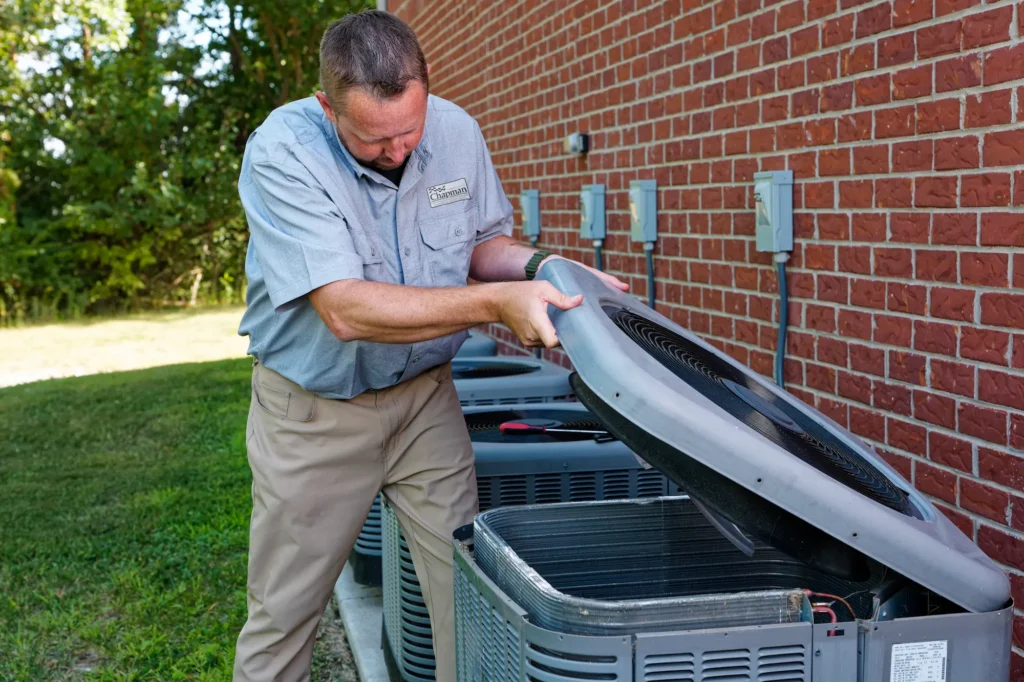




What Is a Heat Pump?
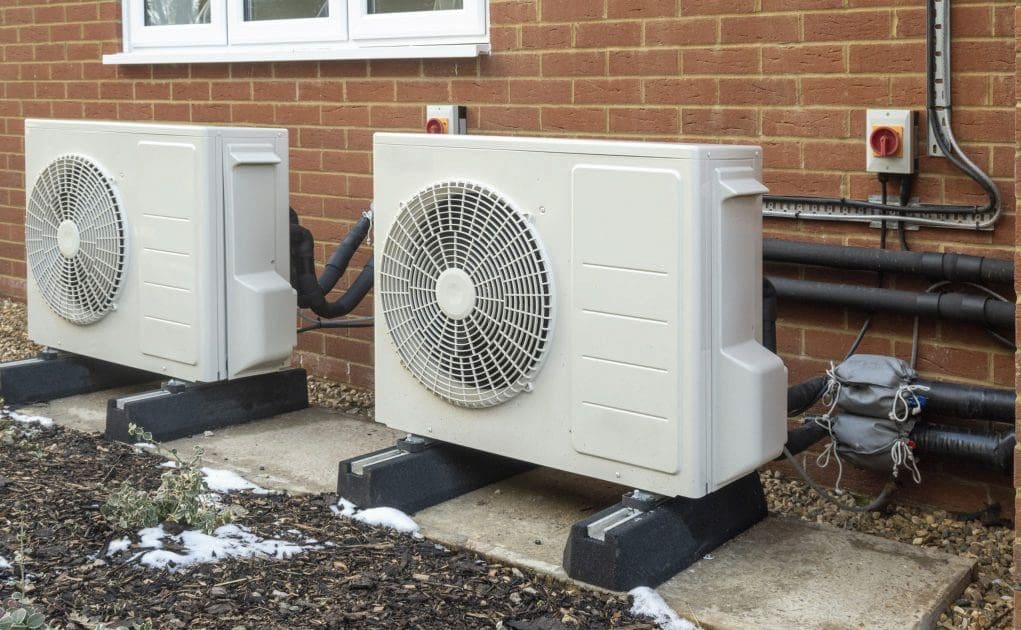
Choosing a new heating and cooling system is a long-term commitment, so why not choose a system that will save you money and has a positive impact on the environment?
We are talking about heat pumps, which are a great HVAC system option. Heat pump units are an energy-efficient alternative to traditional furnaces and air conditioners and are continuing to grow in popularity across Central Indiana.
In our most recent blog, the HVAC technicians at Chapman Heating, Air Conditioning and Plumbing discuss what a heat pump is and why you might want to consider buying one for your Indianapolis home.
Table of Contents
What Is a Heat Pump?
Your traditional HVAC system uses a furnace in the winter and an air conditioner in the summer. A heat pump unit, though, can provide both heating and cooling for year-round comfort.
A heat pump works like an air conditioner in the summer by cooling your home by extracting the warm air in each room and replacing it with cool dry air. It runs in reverse in the winter to heat your home. Because heat pumps transfer heat rather than generate heat, they can provide equivalent space conditioning at a lower cost than a conventional heating or cooling appliance. During the winter, the system will be matched with a backup heating source, most often electric heat for those extremely cold days of winter.
Heat pumps have Seasonal Energy Efficiency Ratio (SEER) ratings like air conditioners and Heating Seasonal Performance Factor (HSPF) ratings for measuring heating efficiency. Higher SEER and HSPF ratings mean greater energy savings.
There are two common types of heat pumps; air-source and geothermal. An air-source heat pump transfers heat between your home and the outside air. Geothermal, or ground-source heat pumps, transfer heat between your home and the ground or the closest water source. Geothermal heat pumps have low operating costs and can be used in climates with more extreme weather.
Heat Pump Types Compared
Not all heat pumps work the same way. The best choice depends on your home's layout, efficiency goals, and the climate in Central Indiana. The comparison below highlights the three most common types of heat pump systems available from Chapman Heating, Air Conditioning & Plumbing.
Heat Pump Type |
Typical Efficiency |
Best For |
Cold Climate Performance |
|---|---|---|---|
| Air-Source Heat Pump | High (SEER2 15–22+, HSPF2 8–10+) | Most existing homes with ductwork looking for year-round heating and cooling. | ★★★★★ Modern cold-climate models perform efficiently through most Indiana winters and may use backup heat during extreme cold. |
| Geothermal Heat Pump | Very High (highest operating efficiency) | Homeowners planning to stay long-term who want maximum energy savings and have adequate yard space. | ★★★★★ Outstanding performance regardless of outdoor temperatures because it uses stable underground temperatures. |
| Ductless Mini-Split Heat Pump | High (SEER2 often 18–30+) | Homes without ductwork, room additions, finished basements, garages, or individual room comfort. | ★★★★☆ Many models operate well below freezing, though whole-home applications may benefit from supplemental heat during extreme cold. |
What is an air-source heat pump system?
An air-source heat pump system transfers heat between your home and the outdoor air to provide both heating and cooling. During the summer, it works much like an air conditioner by removing heat from inside your home and releasing it outdoors. In the winter, it reverses the process, extracting available heat from the outside air—even when temperatures are below freezing—and moving it indoors. Modern air-source heat pumps are highly efficient and are an excellent choice for many homes throughout Indianapolis and Central Indiana. When paired with a backup heating source or installed as part of a dual-fuel system, they can provide reliable year-round comfort while reducing energy consumption. Chapman Heating, Air Conditioning & Plumbing can help determine whether an air-source heat pump is the right solution for your home's size, comfort needs, and budget.
SEER2 and HSPF2: How Heat Pump Efficiency Is Measured
Today's heat pumps are more efficient than ever, but comparing models requires understanding two important efficiency ratings: SEER2 and HSPF2.
SEER2 (Seasonal Energy Efficiency Ratio 2) measures how efficiently a heat pump or air conditioner cools your home throughout the cooling season. A higher SEER2 rating means the system uses less electricity to deliver the same level of comfort during Indiana's hot summers.
HSPF2 (Heating Seasonal Performance Factor 2) measures heat pump efficiency during the heating season. Just as SEER2 evaluates cooling performance, HSPF2 estimates how effectively a heat pump converts electricity into usable heat during colder weather. The higher the HSPF2 rating, the more energy savings you can expect over time.
While efficiency ratings are important, they're only one part of choosing the right heat pump. Proper sizing, professional heat pump installation, insulation, ductwork, and routine HVAC maintenance all affect how efficiently the system performs. Chapman Heating, Air Conditioning & Plumbing helps Central Indiana homeowners select heat pumps that balance upfront cost, long-term energy savings, and year-round comfort.
| Efficiency Rating | Measures | Why It Matters |
|---|---|---|
| SEER2 | Cooling efficiency | Higher ratings reduce summer cooling costs. |
| HSPF2 | Heating efficiency | Higher ratings improve winter energy savings. |
| ENERGY STAR® | Overall high-efficiency performance | May qualify for rebates or tax incentives while lowering operating costs. |
Misconceptions About Heat Pumps
There is a misconception about heat humps that we would like to clear up. Heat pumps are not the enemy. Sometimes prospective homebuyers are turned off by the thought of using a heat pump instead of a traditional heating and cooling system, perhaps because they are not familiar with these systems. But heat pumps are actually a very efficient alternative to electric heat.
What might turn some people off about heat pumps is the initial cost of equipment, installation costs, the cost of electricity and the potential for increased maintenance costs. While any system will be expensive in the beginning, the return on investment is great with a heat pump. The compressors and refrigerant cycle of the heat pump will compound the productivity of your electric heat in the winter.
Raising and lowering a heat pump thermostat will actually raise your bill because it forces the more expensive backup to come on when it would not normally be needed. Be sure to set your thermostat to a comfortable temperature, and don't move it to see increased energy efficiency.
Just like our air conditioners, many of our heat pumps have advanced features, such as two-stage compressors and variable-speed fan operation. These features not only improve the comfort level of your home, but can provide additional energy savings as well.
Heat pumps typically deliver 2.5 to 4.0+ units of heat energy for every 1 unit of electrical energy they consume (a coefficient of performance, or COP, of 2.5–4.0) — they move existing heat rather than generating it, which is why efficiency can exceed 100%.
Source: U.S. Department of Energy, “Heat Pump Systems,” energy.gov/energysaver, 2026
How Do Heat Pumps Perform in Cold Climates Like Central Indiana?
Modern heat pumps perform much better in cold weather than many homeowners realize. Older models sometimes struggled when temperatures dropped below freezing, but today's variable-speed systems can continue producing reliable heat even when outdoor temperatures fall well below 32°F.
For homes throughout Indianapolis and Central Indiana, an air-source heat pump can provide efficient heating during much of the winter. When temperatures become extremely cold, many installations include a backup electric heating element or pair the heat pump with a furnace in a dual-fuel system. This allows the heat pump to deliver outstanding energy efficiency during mild weather while the backup system provides additional heat only when needed.
Because a heat pump doesn't create heat by burning fuel, it simply moves existing heat from the outside air into your home. Even cold winter air contains usable heat energy, allowing modern equipment to remain remarkably efficient throughout much of Indiana's winter.
| Heating System | Best Performance | Energy Efficiency | Ideal For |
|---|---|---|---|
| Modern Air-Source Heat Pump | Cool to moderately cold weather | ★★★★★ | Year-round heating and cooling |
| Dual-Fuel Heat Pump + Furnace | All winter conditions | ★★★★★ | Maximum comfort and lower annual utility bills |
| Traditional Furnace | Very cold temperatures | ★★★★☆ | Homes without a heat pump |
How Do I Maintain a Heat Pump?
Like all heating and cooling machines, you must perform regular heat pump maintenance to keep the machine running in tip-top shape. If you neglect to take care of your heat pump, it could end up costing you more money. You will need to clean or change the air filters once a month depending on the manufacturer's instructions.
Dirty filters and fans will reduce airflow. Most filters will last anywhere from 8 to 12 months. You should also have a professional heating and cooling technician look at your heat pump at least once a year to make sure everything is running smoothly. We typically recommend two tune-ups per year, once in the spring before cooling season and again in the fall before the heating season.
Contact Chapman for Heat Pump Installation Services
Heat pumps are an excellent way for you to save money no matter what season it is. It acts as a furnace and air conditioner, but you're only paying for one machine. It offers long-term cost savings and less dependence on fossil fuels. Your heat pump will supply lower-temperature air than a fossil-fueled furnace, so your heat pump will run for longer periods of time. It delivers steady heating with less energy consumption than the fossil-fueled competition.
Have we sold you on the benefits of having a heat pump installed in your Indianapolis or Central Indiana home? If you're interested in learning more about these energy-efficient systems or would like to schedule installation service, pick up the phone and call Chapman today, or contact us online.
Frequently Asked Questions
The main downsides are higher upfront installation cost compared to a standard air conditioner alone, reduced heating efficiency in very cold temperatures without cold-climate-rated equipment or backup heat, and dependence on electricity rates rather than gas prices for heating costs.
The amount of electricity a heat pump uses depends on your home's size, insulation, thermostat settings, and the efficiency of the system. In the Indianapolis area, a properly sized, high-efficiency heat pump with strong SEER2 and HSPF2 ratings typically uses significantly less energy than electric resistance heating because it transfers heat instead of generating it. Chapman Heating, Air Conditioning & Plumbing can evaluate your home and recommend a system designed to maximize comfort while minimizing monthly utility costs.
Yes. Today's cold-climate heat pumps are designed to operate efficiently even when temperatures fall below freezing, making them an excellent choice for many Central Indiana homes. During the coldest winter days, some systems automatically switch to a backup electric heat source or pair with a gas furnace in a dual-fuel system to maintain indoor comfort. Chapman Heating, Air Conditioning & Plumbing can help you determine whether a standalone heat pump or a dual-fuel system is the best solution for your home's heating needs.
With professional maintenance, most heat pumps provide reliable performance for 15 to 20 years. Factors such as installation quality, usage patterns, and routine service all affect how long a system lasts. Scheduling seasonal tune-ups with Chapman Heating, Air Conditioning & Plumbing helps keep your heat pump operating efficiently, extends its lifespan, and reduces the likelihood of unexpected heat pump repairs throughout the year.