




Common Causes For Furnace Trouble
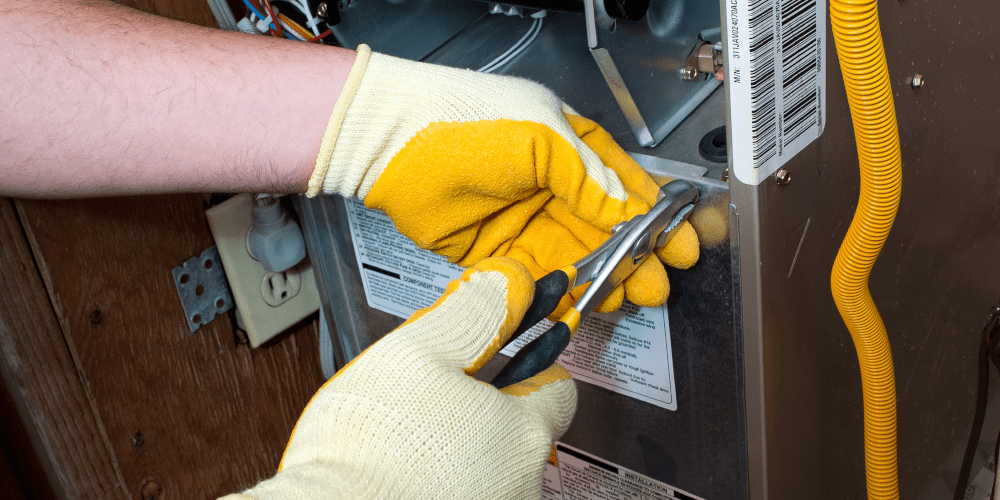
We don't have to remind you of how cold winters can be in Central Indiana. To combat the frigid air from November through March, you need a reliable heating system that can operate efficiently even on the coldest days of the year.
But furnaces , especially those that have been poorly maintained or are older , do tend to break down over time. What should you do when your electric or gas furnace doesn't turn on, starts making weird noises or isn't producing enough heat?
Before you panic or jump to conclusions, call the professional heating and air conditioner technicians at Chapman Heating, Air Conditioning and Plumbing. Problems brought on by a noisy furnace, lack of power to the furnace (if it's electric), or a furnace blower not functioning can usually be easily repaired. Your home's furnace problems might be more common than you think. Chapman has proudly provided HVAC services to the great people of Central Indiana for more than four decades and looks forward to you becoming a customer.
What Causes Furnace Trouble?
Furnace trouble in Central Indiana usually falls into one of four categories: the furnace won't start at all, it starts but doesn't produce enough heat, it runs but makes unusual noises, or it cycles on and off more than it should. Each of these points to a different part of the system, the thermostat, the gas supply and ignition components, the blower and filter, or the ductwork, so the fastest way to figure out what's going on is to match your symptom to the likely cause below. Some of these you can safely check yourself in a few minutes. Others involve gas, electrical components, or the furnace's ignition system and should be left to a licensed technician. Chapman's team has been diagnosing furnace trouble across Indianapolis and Central Indiana for more than four decades, so if you get partway through and aren't sure it's safe to continue, that's exactly what we're here for.
Furnace Won't Start
If your furnace won't start at all, the good news is that this is one of the easier problems to narrow down before you call anyone. Start with the basics: is the thermostat set to "heat" and above the current room temperature, and does it have fresh batteries or power? A thermostat that's dead or misconfigured is one of the most common reasons a furnace simply won't respond. From there, the cause is usually one of three things: a power interruption to the furnace itself, an interrupted gas supply, or a safety switch that's tripped and shut the system down as designed. Indianapolis homes see enough winter storms and brief power blips that a furnace refusing to start after one is more common than people expect, and it's often a quick fix once you know where to look.
Check Your Gas Supply and Power Switch First
Before assuming the worst, check two things that are safe for any homeowner to look at. First, find the furnace's power switch, it looks like a standard wall light switch and is usually mounted on or near the unit, and confirm it hasn't been bumped off. Check your breaker panel too, since a tripped breaker will kill power to the furnace without any other warning sign. Second, look at the gas supply: the shutoff valve on the gas line leading to the furnace should be parallel to the pipe when it's open. If it's turned crosswise, the gas supply is shut off and that alone will keep the furnace from igniting. Also check that a switch on the furnace or nearby hasn't tripped a high-limit or safety switch, which is designed to shut the system down rather than let it run unsafely.
What you should not do is force a gas valve that feels stuck, attempt to relight a pilot light that keeps going out, or continue troubleshooting if you smell gas at any point. A gas smell means stop immediately, leave the house, and call your gas utility or 911 before calling Chapman. For everything else involving the gas supply or ignition system, if the power switch and breaker check out but the furnace still won't start, that's the point to call a Chapman technician rather than keep testing components yourself, since the next likely causes (a faulty ignitor, flame sensor, or gas valve) aren't homeowner-safe repairs.
What Causes Furnaces to Stop Working Properly?
Here are some common causes for furnace trouble and how you can avoid them in the future.
1. Faulty Thermostat
The furnace's thermostat controls and programs when heat is supposed to be produced. If your thermostat is set to your desired room temperature, but it isn't working properly, it probably isn't sending the message to your furnace. Try changing the batteries to eliminate the problem. If that doesn't work, it's time to call Chapman to repair or replace your thermostat.
If your thermostat is set to heat, but it's not releasing much warm air, it's likely that your thermostat is faulty and is relaying the wrong temperature to your home's furnace.
We have a wide selection of thermostats to choose from that will fit your lifestyle perfectly, including programmable and smart thermostats that allow you to set the desired temperature from your smartphone even while you're away from home. We'll check the thermostat for you and figure out what your furnace's problem is.
2. Dirty Air Filter
When your HVAC system's furnace filter becomes dirty or clogged, it doesn't allow the right amount of airflow to the furnace system. A dirty filter will make it harder for your furnace to heat your home. The extra build-up in the air filter makes your furnace system work harder than necessary, which puts a strain on the machine. Some filters need to be replaced every month; some once a year. If you are not sure when to replace the filter, contact Chapman for help. Replacing the dirty and clogged filter will greatly extend the life of your furnace system, and you will have a much warmer home.
3. Lack of Maintenance
Your home heating system is very important, so you want to make sure you get your money's worth. Regularly scheduled maintenance is vital. Your furnace is made up of complex parts that all work together to keep the machine running smoothly. If you forget to schedule regular maintenance, you might experience breakdowns, an increase in your energy bill and a lot of frustration.
We recommend annual maintenance in the fall before you turn the system on for the first time. But even if you've already turned your system on, you should still have the system tuned up to help it provide quality heating on the coldest days of winter.
4. Pilot/Ignition Control Troubles
Some other issues you might be experiencing are problems with your furnace's ignition control. Don't attempt to repair this problem yourself. It's a good idea to have a professional HVAC technician evaluate the situation before it turns into a bigger problem. Our service technicians are available 24 hours a day, 7 days a week.
5. Blocked or Leaking Ducts
If your air ducts are blocked or are leaking, hot air won't be able to reach its end destination. Check that areas near the furnace are clear of any potential debris. A professional may need to pay your home a visit to check on the ducts. If they're blocked or leaking, they might be the source of your home's heating problems.
Is It Safe to Troubleshoot This Yourself?
Most of the furnace trouble covered in this guide, a dead thermostat battery, a dirty filter, a tripped breaker, is safe for any Indianapolis homeowner to check without special tools or training. But a furnace is a combustion appliance running on natural gas, and a small number of failure modes cross the line from "inconvenient" to "dangerous." Before you keep troubleshooting, run through the checklist below. If any of it applies to your situation, stop what you're doing and call Chapman or emergency services rather than continuing on your own.
Safe for you to check: thermostat settings and batteries, the furnace's power switch and breaker, the air filter, and whether vents around the house are open and unblocked.
Not safe for you to touch: anything involving the flame sensor, thermocouple, gas valve, ignitor, or the furnace's internal wiring. These require the right tools, testing equipment, and training to diagnose safely, and a wrong move around a gas or electrical component isn't worth the risk.
Signs of a Gas or Carbon Monoxide Leak
Carbon monoxide is colorless and odorless, which is what makes a malfunctioning furnace genuinely dangerous rather than just inconvenient. Nationally, more than 200 people die every year from carbon monoxide produced by malfunctioning fuel-burning appliances like furnaces, and Central Indiana homes running gas furnaces through long, cold winters are not exempt from that risk. Know the signs and treat them as an emergency, not a troubleshooting step.
Signs of a possible gas leak include a distinct rotten-egg smell near the furnace or gas lines, a hissing sound near a gas connection, or dead or dying houseplants near the furnace for no clear reason. Signs of possible carbon monoxide exposure include headaches, dizziness, nausea, or confusion that improve when you leave the house and return when you're back inside, soot or unusual staining around the furnace, and a furnace pilot light burning yellow instead of blue.
Contact Chapman for Furnace Maintenance and Furnace Repairs
Though we've mentioned common furnace problems that your system might be dealing with, your home might be dealing with a separate problem entirely. Your home's electric or gas furnace should be able to produce heat at the set temperature of your house. If it's not creating enough heat to completely heat the home, you may need furnace services performed.
Not sure if your furnace needs to be repaired or replaced? Tried all the furnace troubleshooting suggestions that you can find? Contact Chapman Heating, Air Conditioning and Plumbing for your heating and cooling needs. Chapman carries a full line of high-efficiency furnaces.
No matter the problem with your home's furnace, the experts at Chapman can help. Contact us today so we can recommend the best services for your home.
Frequently Asked Questions
In Central Indiana, the most common causes are a dirty or clogged air filter, a dead thermostat battery or miscalibrated thermostat, and lapsed annual maintenance before the Indianapolis heating season starts. All three restrict airflow or miscommunicate with the system rather than signaling a major mechanical failure, and a Chapman technician can usually rule them out in a single visit.
Watch for rising energy bills, frequent repair calls, uneven heating room to room, unusual noises that persist after service, a furnace older than 15 to 20 years, and a yellow pilot flame instead of blue, which can point to a combustion problem. If you are seeing several of these signs, Chapman can inspect your system and walk you through repair versus replacement options for your Indianapolis home.
Most gas furnaces last 15 to 20 years, with the U.S. Department of Energy estimating a median service life of about 18 years. Indianapolis winters put real demand on a furnace, so systems nearing or past that range are usually better candidates for replacement than repeated repair. Chapman can help you decide which option makes more sense for your home and budget.
Occasional cycling is normal, but rapid or frequent short cycling usually points to a dirty filter restricting airflow, an oversized furnace, a failing limit switch, or a thermostat placement issue. It is worth having a Chapman technician check it before it strains the system, especially during a cold snap.
Most modern furnaces communicate faults through a blinking LED sequence near the control board. The blink pattern corresponds to a specific fault code listed in the owner’s manual or on a label inside the access panel. If you can’t locate the code chart, a Chapman technician can read the code for you on-site, anywhere in the Indianapolis and Central Indiana service area.
Call right away if you smell gas, suspect a carbon monoxide leak, see scorch marks, or smell burning, or if the issue involves the flame sensor, thermocouple, gas valve, or any electrical component. These are not homeowner-safe repairs. Chapman offers 24/7 emergency furnace repair throughout Indianapolis and Central Indiana.