






What is an HVAC Damper?
HVAC dampers are small metal plates or valves installed in your ductwork. They determine which portion of your home or business gets heated or cooled until the desired temperature setting is reached.
Key Takeaways about HVAC Dampers
- HVAC dampers regulate airflow inside ductwork and help direct heated or cooled air to specific areas of a home or business.
- Dampers are commonly used in zoning systems to improve comfort, reduce hot and cold spots, and increase HVAC energy efficiency.
- Manual dampers are adjusted by hand, while automatic dampers work with thermostats and motors to control airflow automatically.
- Several damper types are used in HVAC systems, including butterfly dampers, blade dampers, louver dampers, guillotine dampers, and inlet vane dampers.
- Proper damper placement and ductwork design help improve airflow control, system performance, indoor comfort, and long-term heating and cooling efficiency.
In other words, they control the amount of heated or cooled air to every part of your property. Dampers are an important part of HVAC zoning systems.
Importance in Your Heating and Cooling System
HVAC dampers help regulate airflow and minimize energy consumption. This, of course, results in lower monthly energy bills and a more comfortable living space.
How Are They Controlled?
Dampers are controlled in one of two ways:
- Manual Dampers: Manual HVAC dampers are operated by moving the valves by hand to open or close them. These valves are situated outside of the ductwork, allowing for easy manual control.
- Automatic Dampers: Automatic dampers are controlled by a motor that opens or closes them. These dampers work in tandem with your thermostat, can be operated remotely, and are capable of self-regulating in response to changing weather conditions.
Types of Dampers in HVAC Systems
There’s more than one type of damper out there. Take a look at the types of HVAC dampers we commonly work with.
Butterfly Flat Dish Dampers
Butterfly flat dish dampers consist of a round blade mounted on a central hinge and seal. The blade regulates the airflow, while the seal ensures that the edges of the blade are securely connected to the duct's circumference, preventing any particles from entering the duct.
Blade Dampers
There are two types of blade dampers: parallel and opposed. As the name suggests, parallel blade dampers have blades that are parallel to each other, while opposed blade dampers have blades that move in opposite directions.
Guillotine Dampers
We get that the name is a little morbid. Guillotine dampers are typically meant for industrial applications that need airflow isolation. They can be used to temporarily isolate airflow while a technician does maintenance on your HVAC system.
Louver Dampers
Louver dampers are the most common dampers used in HVAC systems. As the name suggests, they are louvered, can fit any duct size, and are highly durable in blocking airflow.
Inlet Vane Dampers
Inlet vane dampers are dampers used in appliances that require fan shut-off. These types of dampers can result in long-term energy savings.
Where are HVAC Dampers Located?
HVAC dampers can be placed in a few different areas of your ductwork. Common spots for damper placement include:
- Main Supply Ducts: This is the most common location for damper placement. They are placed in the main supply ducts to help control airflow to different areas of your house.
- Branch Ducts: Dampers can be placed in the branches of ducts, which allow for better temperature and airflow control.
- Return Ducts: Return ducts are an excellent location for managing and ensuring even pressure distribution.
Things to Consider When Installing a Damper
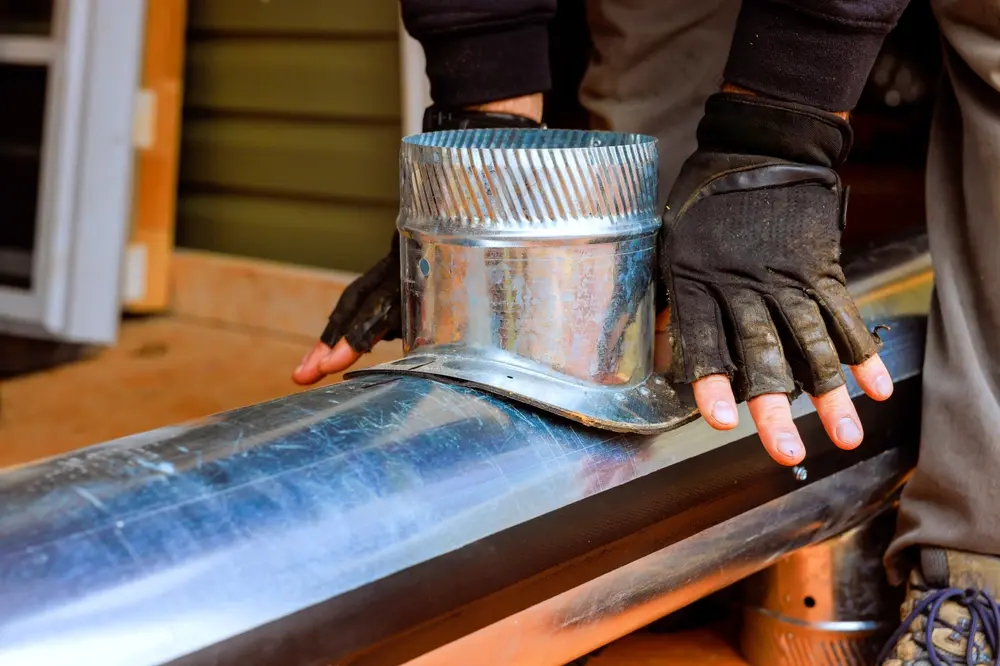
The number one thing to consider when installing HVAC dampers is how efficient they’ll be in controlling the airflow to certain parts of your property. Ductwork design plays a significant role in determining this.
Ductwork Design
It’s important to consider the design of your ducts. For example, branch ducts may be the best option for you if your ductwork runs to different areas of your home or business.
Benefits of Using Dampers in Your HVAC System
There are many benefits to using HVAC dampers. Let’s take a look at some of them.
Energy Efficiency and Savings
Regulating the flow of your air can reduce the cost of your monthly energy bills.
Reduced Hot and Cold Spots
Dampers can solve the issue of a hot upstairs and a cold downstairs.
Enhanced System Performance
The more controlled your airflow is, the better — and longer — your HVAC system will perform.
Solve Airflow Issues with Professional HVAC Solutions
There’s no need to be uncomfortable in your own home or business if you choose the right HVAC company.
For more than 40 years, Chapman Heating, Air Conditioning, & Plumbing has been providing HVAC solutions to homes and businesses across the Indianapolis area. If you've been looking to find the right HVAC contractor in the Indianapolis area, Chapman is your answer.
Control your airflow the Chapman way, and contact us for more information about our HVAC damper services.
Get a Free Estimate
Wondering why your AC unit is freezing up in the hottest months of the year? You might ask yourself, “How is it that it’s 90 degrees outside and my AC unit has frost buildup?” This issue actually happens to be a very common problem and can lead to further HVAC complications.
So, why is your AC unit freezing up? And, what can you do to prevent this from happening? It’s important to understand the causes and preventive measures to tackle this common air conditioning issue.
Table of Contents
- What Causes an AC Unit to Freeze Up?
- Can a Dirty Evaporator Coil Cause AC Freezing?
- Why Does My AC Unit Freeze Up at Night?
- How to Stop Your Air Conditioner From Freezing Up
- Warning Signs Before Frozen Coils Develop
- Reliable Air Conditioning Services in Central Indiana
What Causes an AC Unit to Freeze Up?
Low AC Refrigerant
Your AC unit requires a certain amount of refrigerant to guarantee the best cooling performance. When the refrigerant falls under the required amount, the balance will be thrown off and lead to your air conditioner freezing.
If you spot frozen coils, this is a common sign your air conditioner has low refrigerant levels. Contact a professional technician to restore your air conditioner’s refrigerant levels and mitigate the possibility of future AC problems.
Dirty Air Filters
One of the most common factors that leads to your AC freezing up is a dirty air filter. Your air conditioner’s air filter can become dirty due to debris buildup and dirt accumulation. This will then lead to a lack of airflow into your AC system and cause it to overwork itself, resulting in a freeze. Monitor your air filters and change them regularly to avoid a frozen AC unit.
Monitor your air filters and change them regularly to avoid a frozen AC unit. Homeowners looking for improved filtration and cleaner indoor air may also benefit from installing air filtration systems designed to reduce dust and airborne contaminants.
Broken or Clogged Coils
A broken or clogged evaporator coil can also lead to a frozen AC unit. Evaporator coils may become clogged due to dirt and dust buildup or they can become corroded over time and break and lack efficiency. These issues compound and lead to unusual temperatures, leading to ice buildup.
If the evaporator coil has become damaged or corroded, professional AC repair may be necessary to restore proper cooling performance and prevent recurring freeze-ups.
Blocked Air Vents
A blocked air vent is caused by the same debris and dirt buildup seen with dirty air filters. The same cause leads to the result, a frozen AC unit. Check your air vents regularly and clean and vacuum them when necessary.
Damaged Blower Motor
The blower motor in your air conditioning system plays a key role in keeping your home cool. If the blower motor becomes damaged or fails altogether, this can cause your AC unit to freeze and cease working. Hearing a rattling sound while it’s trying to operate indicates something is wrong with it. Issues with a blower motor are a more complex issue and an HVAC technician should be consulted if the blower motor is the culprit.
Because the blower motor works closely with the air handler to circulate conditioned air throughout your home, airflow problems may require professional air handler repair services.
Clogged Condensate Drain Line
Your AC’s condensate drain line is responsible for removing water created in the cooling system and disposing it away from your home. The condensate drain line can become clogged due to dirt, mold, or debris and the created excess moisture can flow into your AC unit and home, possibly causing issues to both. And ultimately, freeze your air conditioning coils.
Most Common Causes of AC Freezing
| Cause | Impact on System | DIY or Professional? |
|---|---|---|
| Dirty Air Filter | Restricted airflow causes ice buildup | DIY |
| Low Refrigerant | Drops coil temperature below freezing | Professional |
| Dirty Evaporator Coil | Poor heat absorption creates frozen coils | Professional |
| Blocked Air Vents | Reduces system airflow | DIY |
| Damaged Blower Motor | Insufficient air movement | Professional |
| Clogged Condensate Drain | Excess moisture contributes to freezing | DIY / Professional |
Can a Dirty Evaporator Coil Cause AC Freezing?
Yes. A dirty evaporator coil is one of the most overlooked reasons for AC freezing up. Your evaporator coil is responsible for absorbing heat from the air inside your home. When dirt, dust, pet dander, and other contaminants accumulate on the coil surface, airflow becomes restricted and heat transfer decreases.
As the evaporator coil gets colder than normal, condensation begins to freeze on the surface. Over time, this ice buildup can spread and create frozen coils that prevent your air conditioner from cooling properly. In severe cases, airflow may become completely blocked, causing higher energy bills and additional strain on your HVAC system.
Scheduling annual AC maintenance helps keep the evaporator coil clean and operating efficiently. During a professional tune-up, technicians can inspect the coil, remove debris buildup, and identify early warning signs before a minor issue becomes a costly repair.
Why Does My AC Unit Freeze Up at Night?
Many homeowners notice their AC unit freezes overnight or during cooler evenings. While outdoor temperatures can contribute, the underlying cause is usually an airflow or refrigerant issue.
A dirty air filter is one of the most common culprits. When the air filter becomes clogged, warm air cannot move across the evaporator coil as intended. Without enough heat entering the system, temperatures inside the coil drop below freezing and ice begins to form.
Low refrigerant levels, blocked vents, dirty evaporator coils, and malfunctioning blower motors can create similar conditions. If your unit freezes repeatedly, simply thawing the ice will not solve the root problem. Scheduling a professional AC repair service can identify the source of the problem and prevent future frozen coils from developing.
Because the blower motor is responsible for moving air across the evaporator coil, issues with this component can significantly increase the likelihood of freeze-ups. Chapman also provides air handler repair services for airflow-related HVAC issues.
How to Stop Your Air Conditioner From Freezing Up
Now that the causes of this problem have been established, what are the ways to prevent a frozen AC unit? Use these tips as an added layer of protection against freeze buildup.
1. Check Refrigerant Levels
Have an HVAC technician inspect your refrigerant levels to determine if your AC unit needs or is sufficient for the time being.
2. Replace Your Air Filter
You should practice regularly checking your AC’s air filters. Inspect the air conditioner’s air filters for debris or dirt buildup and clean or replace them every one to two months. This will improve your air conditioner’s performance and the quality of air. Replacing a dirty or clogged air filter can lower your air conditioner’s energy consumption by 5% to 15%.
3. Inspect the AC Drain Line
It’s important to check your AC drain line throughout the summer, but using a dry/wet shop vacuum to remove debris and other buildup will help you prevent a frozen AC unit. You can also turn to an HVAC specialist to help with this preventive measure.
4. Keep Vents Open
Keeping your vents open and free of blockages is one of the easiest ways to prevent a frozen AC unit. Avoid closing more than two or three vents at any given time.
5. Contact an HVAC Technician to Inspect Your Fan
Your blower motor’s fan is a vital piece of equipment to help generate airflow. This is often difficult to do on your own, so contact an HVAC technician to inspect your fan. Keeping the blower motor’s fan in working order is an important step to prevent a frozen AC unit.
Warning Signs Before Frozen Coils Develop
Most air conditioners show warning signs before ice becomes visible. Watching for these symptoms can help you address problems early and avoid a complete system shutdown.
- Weak airflow coming from vents
- Warm air blowing instead of cool air
- Unusually long cooling cycles
- Higher utility bills
- Water pooling around the indoor unit
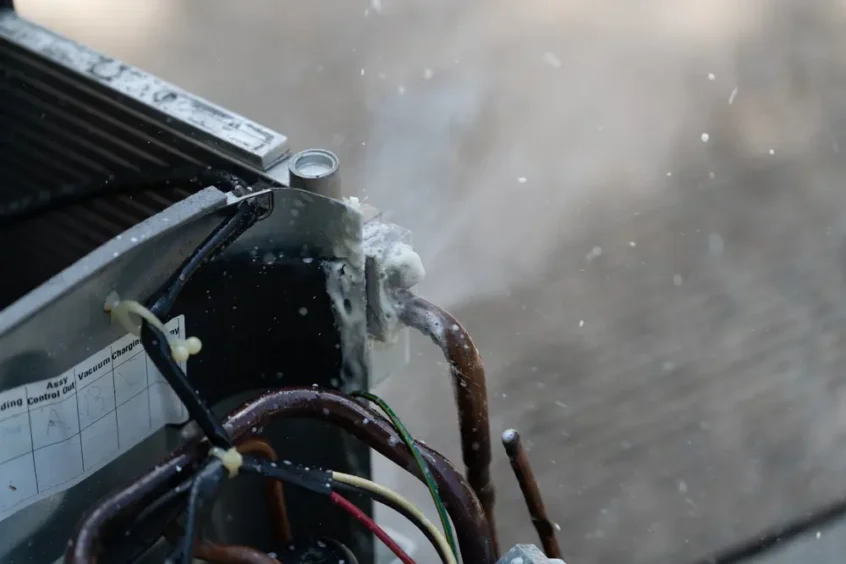
- Ice forming on refrigerant lines
- Visible frost on the evaporator coil
- Strange noises coming from the blower assembly
If you notice these warning signs during extreme heat, it's important to act quickly. Ignoring frozen coils can eventually lead to compressor damage and complete cooling system failure. Chapman offers 24/7 emergency AC repair for urgent cooling problems throughout the Indianapolis area.
Serving Carmel, Fishers, Lawrence, and Nearby Cities with Reliable Air Conditioning Services
A frozen AC unit at your home can stem from a variety of causes, but thankfully, there’s a great list of preventative measures to help you start preventing it from happening. If your options have run out and you’re stuck with a frozen AC unit in the Indianapolis, Indiana, area, Chapman Heating, Air Conditioning, Plumbing & Electrical is ready to help.
Scheduling annual AC maintenance helps keep the evaporator coil clean and operating efficiently. During a professional tune-up, technicians can inspect the coil, remove debris buildup, and identify early warning signs before a minor issue becomes a costly repair. Regular maintenance is one of the best ways to prevent AC freezing issues before they start.
If dirt and debris buildup are contributing to restricted airflow, professional air duct cleaning may help improve overall system performance and indoor air quality.
Homes in Indianapolis and beyond look forward to the warm weather brought by spring. After spending many months cooped up inside during the colder winter months, many families will jump at the first chance to spend some time outside in the warm weather. As spring arrives and the weather gets warmer, however, those within your home will likely deal with symptoms caused by seasonal allergies.
One of the main causes of seasonal allergies, cottonwood, can cause a variety of allergy symptoms. However, cottonwood can also cause serious and expensive problems with your home's air conditioning system.
What is Cottonwood?
Cottonwood is the little white tufts of cotton that have been floating through the air. They come from cottonwood trees. Notorious for causing allergy symptoms like sneezing, itchy eyes, and congestion, cottonwood can wreak havoc on your family if it manages to get into your air conditioner's condenser coils. However, it can also cause issues to the AC system itself.
Unfortunately, one cottonwood tree can cause hundreds of dollars worth of damage to your air conditioning unit. Cottonwood produces small and fuzzy bits of cotton that fly around outside and can latch onto your air conditioner coils. They can easily be sucked into a condenser coil and cause reduced airflow across the coil.
Over time, this will cause your air conditioner to become less energy efficient. It will have to work twice as hard as it normally would, causing you to pay more money for the same, or even less, cool air than you might usually have. These problems can build and could potentially even result in an overheated compressor, requiring you to have an expensive replacement installed.
How to Protect Your AC Unit
Don't wait until your air conditioner is beyond the point of a simple repair. The easiest way to get rid of a cottonwood problem is to have your air conditioner professionally cleaned as soon as possible. You might think this is an easy task to handle yourself, but we strongly recommend the help of a professional. If you try to clean off the coil yourself, you might embed the cottonwood seeds deep into the coils and make the situation worse.
Air Conditioning Cleaning Services
Certified HVAC technicians understand how every make and model works because they have received the proper training. Your air conditioning technician should be able to inspect your system, determine if cottonwood is causing any airflow problems, and properly clean out the cottonwood.
Beyond being incredibly important to your home's comfort during the warm weather, air conditioners are very expensive to replace if you try to fix the issue yourself and cause further damage. Trying to fix the issue yourself might end up damaging your machine beyond repair. To avoid causing irreparable damage, get in touch with a professional.
Contact Chapman for Air Conditioning Services
Don't let the increased amount of cottonwood in the air ruin your air conditioner. Solve the problem by calling an HVAC service technician to properly clean your machine. They will make sure your coils are cleaned without doing more damage to your AC unit. Save yourself the time and money, and pick up the phone and call Chapman Heating and Air Conditioning at (317) 207-9378 or schedule a service appointment online today!
We often put a lot of emphasis on purchasing heating and cooling equipment that is 'energy-efficient' , and why not? Who doesn't want to save some of their hard-earned money by lowering their monthly energy bills?
But what does energy efficiency actually mean when it comes to HVAC systems? In our most recent blog, the technicians at Chapman shed some light on efficiency ratings so the next time you're in the market for a new system, you'll know the right questions to ask. For all of your heating and air conditioning needs in Indianapolis, contact Chapman today.
What Ratings Are Used to Measure a Cooling System's Performance?
Energy-efficiency ratings play an important role in determining how much you will spend on a heating and cooling system and its operating costs. Seasonal energy efficiency ratio (SEER) and energy efficiency ratio (EER) are the two efficiency ratings used to measure a system's performance. A unit with higher SEER and EER ratings will equal lower operating costs but will come with a higher price tag.
First, let's dive a little deeper into these efficiency ratings.
SEER rating
If you're in the market for a new air conditioning system, a SEER rating is one of the most important factors to consider before making a purchase. According to Energy.gov, a seasonal energy efficiency rating is a measure of how much cooling output your home's central air conditioner puts out during an entire season in comparison to the energy it uses to do so.
When it comes to seasonal energy-efficiency ratio ratings, the higher the number, the more energy-efficient the cooling system is. A 10 SEER air conditioner won't be as energy-efficient as a 13, 16, or 20 SEER unit, for example. An older model will have a lower SEER number, which will mean that you will end up paying more money each month on your energy bill. A newer model, on the other hand, will likely have a high SEER rating that will lower your home's energy usage and save you money on your energy bill.
Air conditioners manufactured today have SEER ratings as low as 13 to as high as 24. To achieve ENERGY STAR status, your AC unit must have at least a 14.5 SEER. According to Energy.gov, upgrading from SEER 9 to 14, for example, can reduce your energy consumption by 35 percent. So if you were paying $100 a month in cooling costs, your bill would be reduced by $35.
It's important to note that you'll pay more upfront for a high-efficiency air conditioning unit, but you'll recoup that money over time with the energy savings you'll gain.
EER rating
An EER efficiency rating isn't as commonly referred to because it applies only to room air conditioning units. Room air conditioners cool rooms rather than an entire home or business. Room air conditioners are less expensive to operate than central units but do not have nearly as much coverage.
An EER efficiency rating is a standardized measure of an air conditioner's overall efficiency. The EER rating is calculated by dividing the BTU, or British Thermal Units, rating by wattage. The measurement is based on operating an AC when the temperature is 95 degrees Fahrenheit outside. The average EER rating is about 8.5 Anything above a 10 EER is considered efficient.
Choosing the right size room air conditioner is very important. A small unit running for an extended period of time operates more efficiently than a large unit that cycles on and off too frequently. Always consult with an HVAC system contractor before you make a purchase to get an expert opinion on the right unit for your needs.
How to Check Your Air Conditioner's Energy Efficiency
If you want to find out what your air conditioner's energy-efficient rating is, check your system's user manual or the AC's cabinet. If you have an older system with a lower SEER or EER rating, it could be a good time to upgrade to a newer, energy-efficient model.
When it comes to understanding HVAC energy efficiency ratings, things can get tricky. But understanding which energy efficiency rating applies to which air conditioning unit will greatly help when it comes time to purchase a new unit.
Contact Chapman for Your Home's HVAC System Needs
If you still have questions about SEER ratings, EER ratings, or anything else regarding HVAC systems or equipment, make sure to ask the HVAC system technicians at Chapman. They will be able to provide the right answers and guide you in the right direction. When you're ready to request an estimate for a new HVAC or air conditioning system or schedule an appointment, call Chapman at (317) 207-9378!
Chapman Heating | Air Conditioning | Plumbing is proud to keep homes cool all across Indianapolis and Central Indiana. Day in and day out you will see our trucks in residential neighborhoods Carmel, Fishers, Zionsville and Westfield too!
With a service fleet of 35 trucks it is easy for us to keep homeowners in Carmel comfortable all year long. Our trained technicians are ready to take care of all their air conditioning, heating and plumbing installation and repair service needs.
Here's what some folks in the area had to say about us:
I am very impressed with the service I received, I had a furnace repair. I received a phone call that the technician was on his was 40 minutes prior to the four-hour window I was given for him to arrive; he arrived 10 minutes after that. He was polite and professional, and was able to quickly diagnose and repair my furnace and thoroughly explained and showed me what the issue was and what he did to fix it. , Rachel
I can't thank Chapman Heating enough for getting their team together and helping me out of an HVAC jam just before the Thanksgiving holiday. They have an amazing group of people working for them who show respect for their clients and the business they represent. Chapman Heating and their loyal team will forever be the "Good Guys" in my book! , Julie
Chapman installed our new water heater and heating/air units. If you want excellent, fair, timely and clean service, call Chapman. You won't be disappointed. I thought customer service was a thing of the past, but not at Chapman. They seem to really appreciate your business! , Connie
Chapman is excellent in service and installation work. We love our clean air system and the entire house is fresher. It has been several years since the installation and the Chapman team continues to impress my family with their service. The clean air system has eliminated allergies in our household. , Martha
Do you live in Carmel, or the Carmel-area, and need quality air conditioning repair, air conditioning installation, furnace installation, furnace repair, plumbing installation and plumbing repair? Call your friends at Chapman. Chapman | Heating | Air Conditioning | Plumbing is your source for qualified HVAC repair and installation contractors in Central Indiana.
Oh, and if you catch on of our trucks out and about be sure to take a snap shot and put it up on Facebook or just say 'Hello' to us!
More and more folks are hopping on the geothermal bandwagon, and Chapman Heating, Air Conditioning, Plumbing & Electrical couldn't be happier!
Homeowners across Indianapolis are discovering the incredible benefits of geothermal systems for year-round comfort. Whether you're considering replacing an aging furnace or air conditioner, or simply want to save on energy costs while reducing your environmental impact, geothermal heat pumps offer an innovative solution that's both practical and sustainable.
For those of you who don't know, geothermal systems use the natural insulating properties of the Earth as the means of keeping the inside of your home at a consistent temperature all year long. Even with the dynamic changes in temperature with each season, geothermal heat pumps keep your home just right.
How Geothermal Heat Pumps Work
Here's something remarkable: no matter how cold it gets or how hot it gets above ground, the ground temperature below the frost line actually stays relatively consistent at around 50-60°F year-round in the Indianapolis area.
Geothermal technologies take advantage of this stable ground heat to provide efficient heating and cooling for your home. The system works through a heat exchanger loop buried underground, which transfers heat between your home and the earth.
Here's how the process works:
A series of underground pipes (called a loop system) circulates a water-based solution that absorbs or releases heat depending on the season. This geothermal energy is then transferred to your home through a heat pump unit, providing incredibly efficient heating and cooling.
When It's Cold: Geothermal Heating Mode
During the bitter cold winter months, a geothermal unit can be set to heating mode. Here's what happens:
- The underground loop system absorbs heat from the earth (which remains warmer than the freezing air above)
- The heat exchanger transfers this ground heat to a refrigerant
- The heat pump concentrates this heat and distributes it through your ductwork as warm air
- Your home stays comfortable even when Indianapolis temperatures plummet
This process of extracting heat from the ground and pulling it into the main system provides consistent, reliable heating without the fluctuations common with traditional furnaces.
When It's Hot: Geothermal Cooling Mode
In the hot, hot summer months, the unit can then be set to cooling mode. In a role reversal, the geothermal heat pump cools your home, not by bringing in cool air, but by extracting the hot air from your home and either:
- Sending it back to the earth through the underground loop system
- Using it to preheat water in your hot water tank (a feature called "desuperheating" that provides free or nearly-free water heating)
This dual-purpose capability means your geothermal system works smarter, not harder, to maintain comfort while reducing energy consumption.
Why Switch to Geothermal: The Benefits
Now you know how it works. Here's why we love it as an alternative to traditional heating and cooling systems, and why Indianapolis homeowners are making the switch.
Switch to Geothermal to Save on Energy Costs
Geothermal heating and cooling units operate at around 300-600% efficiency compared to traditional systems. Let that sink in for a moment.
Here's what that means for your wallet:
- Geothermal heat pumps typically deliver 3 to 6 units of energy for every unit of electricity consumed
- Across all heating, cooling, and hot water expenses, owners can potentially save up to 40-70% on heating costs and overall energy bills
- The average Indianapolis homeowner can save $500-$1,500 annually compared to conventional heating and cooling systems
- Monthly utility bills remain stable and predictable year-round
That is a pretty good reason on its own! But there's more to it.
These systems also carry a longer life expectancy and require less general maintenance, helping you save money in the long run as well. While conventional air source heat pumps last 10-15 years, geothermal systems can operate efficiently for 20-25 years, with the underground loop lasting 50+ years.
Geothermal System Incentives and Tax Benefits
The financial benefits of switching to geothermal extend beyond monthly energy savings. Homeowners who install geothermal heat pumps may qualify for substantial incentives:
- Federal tax credits: Up to 30% of installation costs through the Residential Clean Energy Credit
- State and local incentives: Indiana offers various incentives for renewable energy installations
- Utility company rebates: Many local utility providers offer rebates for geothermal installations
- Financing options: Special low-interest loans may be available for renewable energy systems
These incentives can significantly offset the upfront cost of installation, making the switch to geothermal more affordable than ever. Chapman Heating can help you navigate available incentives and maximize your savings.
Reduce Your Environmental Impact with Geothermal Energy
Geothermal heat pumps are extraordinarily environmentally friendly, making them the ideal choice for eco-conscious Indianapolis homeowners.
Why geothermal is clean heating:
- Geothermal heat pumps do not emit any carbon dioxide, carbon monoxide, or any other pollutants during operation
- Harnessing the Earth's heat means the pump uses a renewable and clean source of energy
- No combustion means no greenhouse gas emissions at your home
- Reduces your household's carbon footprint by 40-70% compared to traditional systems
By choosing clean heating and cooling through geothermal technologies, you're not just improving your home comfort—you're contributing to a more sustainable future for Indianapolis and beyond.
The renewable energy advantage:
Geothermal energy is constantly renewed by the sun warming the earth's surface and by natural geological processes deep underground. Unlike fossil fuels that deplete over time, ground heat is an infinite resource that will never run out. This makes geothermal one of the most sustainable heating and cooling options available.
Experience Better Overall Home Comfort
More than money or environmental impacts, geothermal heat pumps just make your home more comfortable. Here's how:
Consistent, Precise Temperature Control
Geothermal systems are more precise in their distribution of hot and cold air throughout your home. Unlike conventional systems that cycle on and off frequently, creating temperature swings, geothermal heat pumps maintain steady, even temperatures.
You'll notice:
- No more cold spots or hot spots in different rooms
- Consistent comfort from floor to ceiling
- Gentle air delivery without dramatic temperature fluctuations
- Better humidity control year-round
Built-In Dehumidification
Due to their design, geothermal systems also act as dehumidifiers during cooling season. This dual function means:
- Your home feels more comfortable at higher thermostat settings
- Reduced moisture helps prevent mold and mildew growth
- You can save additional energy by running your thermostat at more moderate temperatures
- Indoor air quality improves significantly
Whisper-Quiet Operation
Geothermal heat pumps are also quieter than regular air conditioners or furnaces, giving you and your neighborhood better peace. Since there's no outdoor condensing unit making noise, you'll only hear the gentle hum of the indoor heat pump unit—similar to a high-efficiency furnace.
Benefits of quiet operation:
- Sleep better without outdoor unit noise
- Enjoy your outdoor spaces without mechanical sounds
- Better relationships with neighbors (no noisy equipment)
- Increased property value and curb appeal
Is Geothermal Right for Your Indianapolis Home?
While geothermal systems offer tremendous advantages, they're not right for every situation. Here's what to consider:
Ideal candidates for geothermal include:
- Homeowners planning to stay in their home for 5+ years to recoup installation cost
- Properties with adequate land area for loop installation (typically ¼ acre or more)
- Those replacing aging HVAC systems or building new homes
- Homeowners who prioritize energy efficiency and environmental responsibility
- Properties with high heating costs using propane, oil, or electric resistance heating
What about installation cost?
Yes, the upfront cost to install a geothermal system is higher than conventional systems—typically $20,000-$30,000 for a complete installation. However, when you factor in available incentives, long-term energy savings, and reduced maintenance costs, most Indianapolis homeowners see a complete return on investment within 5-10 years.
Types of Geothermal Loop Systems
When you decide to switch to geothermal, you'll work with our experts to determine which loop configuration works best for your property:
Horizontal Loop Systems:
- Most cost-effective option for residential installations
- Requires sufficient yard space for trenching
- Pipes installed 4-6 feet deep in trenches
- Ideal for new construction with available land
Vertical Loop Systems:
- Best for smaller lots with limited space
- Boreholes drilled 100-400 feet deep
- Higher installation cost but minimal landscape disruption
- Excellent for retrofitting existing homes
Pond/Lake Loop Systems:
- Most economical option if you have a suitable water source
- Coils placed at the bottom of a pond or lake
- Requires adequate water depth and volume
- Simple installation with excellent efficiency
Why Choose Chapman Heating for Your Geothermal Installation
Better savings, better for the environment, and better for your comfort. No matter how you look at it, geothermal heat pumps are just better.
Chapman Heating, Air Conditioning, Plumbing & Electrical carries a full line of geothermal heat pumps and has the expertise to design and install the perfect geothermal system for your Indianapolis home.
Our geothermal services include:
- Comprehensive property assessment and system design
- Expert guidance on loop system selection
- Professional installation by certified technicians
- Help securing available incentives and rebates
- Ongoing maintenance and service for geothermal systems
- Performance monitoring to ensure optimal efficiency
Start Saving with Geothermal Heat Today
The benefits of geothermal heating and cooling are clear: lower energy bills, reduced environmental impact, superior comfort, and long-term reliability. With generous incentives available and energy costs continuing to rise, there's never been a better time to make the switch.
Chapman Heating, Air Conditioning, Plumbing & Electrical is your source for qualified HVAC repair and installation contractors specializing in geothermal technologies. We're committed to helping Indianapolis homeowners discover the advantages of clean heating and cooling through renewable geothermal energy.
Join the growing number of Indianapolis homeowners who have made the switch to geothermal. Contact Chapman Heating today at (317) 207-9378 and start enjoying the comfort, savings, and peace of mind that comes with geothermal heat pumps.
Experience the future of home comfort. Experience geothermal.
With a “3-season room,” you have the perfect place to enjoy the beauty of the great outdoors with your loved ones.
In the spring and summer, you can sit out with a book or open up a few of the windows to enjoy the breeze. You can watch the beauty of a thunderstorm while staying safe and dry. Then, in the fall, you can sit with a sweater and a cup of coffee and watch the leaves change colors.
However, one of the most challenging parts of maintaining your three-season room is controlling the temperature.
Without insulation, your room is just about useless in the winter. The cold may be too intense for you to stand without bundling up too much. In the summer, you may not want to open the windows because of allergies or the extreme heat. Even in the spring and fall, the fluctuating temperatures can make it difficult to maintain comfort.
Enter a ductless mini-split system. Sometimes called a ductless heating and cooling system, mini splits are the perfect answer for maintaining the temperature and comfort of your three-season room. You can almost turn your three-season room into a four-season room.
What Is a Ductless Mini Split System?
These versatile systems offer flexible heating and cooling options for individual rooms in your home, including your three-season room.
A ductless mini-split is made up of two main pieces:
- The outdoor compressor, which includes a condensing coil.
- An indoor air-handling unit, which is typically mounted on a wall.
Other than a three-season room, you’ll also find mini splits are common in garages, master bedrooms, and room additions. Like regular AC and heating systems, ductless systems need regular maintenance and service.
What Are the Benefits of a Ductless Mini Split?
There are a few benefits to having mini-splits installed in your home. A few of these are outlined below.
They Always Keep the Perfect Temperature
As the name implies, mini splits are completely independent heating and cooling systems from the rest of your home. This unique setup allows for total control and finding the perfect temperature.
A little hot in the summer? Crank up the cooling. Chilly fall evening, but still want to enjoy the outdoors? Turn on the heater. This control even gives you the ability to spend some comfortable winter afternoons in your three-season room.
They Are Cost-Effective and Energy-Efficient
Since the mini-split is controlled separately and only when you want it, you don’t have to worry about the mini-split driving up your energy bill.
Instead of cranking the central AC in hopes of cooling off the room and draining the cool air in the house, just fire up the mini-split as you need it.
They Are Quiet While in Use
A mini-split is not like a normal fan that is constantly whirring. After all, you want to enjoy your three-season room in peace and quiet without the constant, loud buzzing of a fan.
A ductless mini-split is relatively quiet and will provide that sense of tranquility you want. It is also small, compact, and on the wall. That means no maneuvering around a bulky box fan or tripping over cords.
They Are Easy to Install
Another benefit of using a mini-split in your three-season room is how easy the installation process is. With traditional heating and cooling systems, extensive ductwork and space-consuming central units are required.
Ductless mini-split systems, on the other hand, only have a few components (outdoor unit, indoor unit, and conduit that connects them). Overall, this saves homeowners time, money, and hassle during installation.
They Improve Air Quality
Not only do these systems provide cost-effective temperature control, but they also help improve the air quality in your Indianapolis home. Since there is no ductwork that can become clogged and dirty over time, there is a smaller chance of dust, allergens, or other debris accumulating inside the ducts and causing respiratory issues.
Plus, many ductless mini-split systems have air filtration systems that can trap and remove harmful particles from the air, such as dust, mold, and bacteria.
Ready to upgrade your three-season room or thinking about putting one in in time for summer? Take advantage of the temperature comfort and control that only a ductless mini split can provide.
Call your friends at Chapman to help get the installation process started. We carry top-of-the-line heating and cooling products built to battle the extreme and spastic Indiana heat and cold.
Seasonal allergies don't stop at the front door. Pollen, dust, and pet dander can easily make their way inside your home, triggering uncomfortable symptoms long after you leave the outdoors.
If you're wondering "do air conditioners help with allergies?"—the answer is yes, when properly maintained and used correctly.
Your air conditioning system can be one of the most effective ways to reduce allergens and improve indoor air quality throughout the year. Understanding the connection between allergies and air conditioning—and how your HVAC system helps control indoor allergens—can make a noticeable difference in how you and your family feel, especially during warm weather months.
What Causes Allergy Symptoms in Your Home
Many people associate allergies with spring and fall, but indoor allergy symptoms can linger year-round. The source often isn't just outdoor pollen—it's what builds up and circulates inside your living space.
Common indoor allergens include:
- Pollen that enters through open doors and windows
- Dust and dust mites that thrive in carpets and upholstery
- Pet dander from cats and dogs
- Mold spores in damp areas
- Air contaminants that recirculate through your HVAC system
How Dust, Pollen, and Other Allergens Trigger Reactions
Every time you open doors or windows during warm weather, pollen and outdoor allergens can enter your home. Once inside, they settle into carpets, furniture, bedding, and ductwork.
Dust particles act as carriers for these allergens, allowing them to become airborne again whenever air moves through the house. Without proper air filters and regular maintenance, your AC can blow dust all throughout your living space, triggering reactions in people who are sensitive.
The cycle works like this: Air contaminants enter your home → They settle on surfaces → Your HVAC system pulls air in → Without clean filters, it can circulate airborne allergens back into every room.
This is why air conditioning itself isn't automatically helpful—it needs to be properly maintained to protect your indoor air quality.
The Role of Mold and Mites in Indoor Allergy Problems
Moist environments create the perfect breeding ground for mold, especially in areas like:
- Drain pans and AC coils
- Basements and crawl spaces
- Bathrooms with poor ventilation
- Any area where humidity levels stay consistently high
Dust mites also thrive indoors, particularly in humid conditions. Both mold and mites are common triggers that contribute to sneezing, congestion, watery eyes, and even asthma symptoms in sensitive individuals.
How Humidity Makes Allergens Worse
High humidity doesn't just feel uncomfortable—it creates ideal conditions for allergen growth. When moisture levels rise above 50%, mold spores spread more easily, and dust mites multiply faster.
Managing indoor humidity is one of the most overlooked ways to reduce allergy symptoms at home. That's where your air conditioner plays a crucial role in maintaining health and comfort.
Can Air Conditioning Help Allergies?
Yes—when used correctly, air conditioning can significantly improve allergy symptoms.
Your AC does more than cool your home. When operating correctly, it helps:
- Regulate airflow to keep air moving and filtered
- Control moisture to reduce humidity that fuels mold growth
- Filter airborne particles before they circulate through living spaces
- Maintain consistent indoor conditions that discourage allergen buildup
By keeping windows closed and running your air conditioning during high-pollen days, you limit how much pollen and outdoor allergens enter your living space. This creates a cleaner, more controlled indoor environment that's easier on people with allergies or asthma.
However, AC units can be part of the problem if they're not maintained. A dirty system may actually make symptoms worse by spreading dust, mold, and other irritants.
How Your AC Filters and Cleans the Air
Your HVAC system's air filters serve as the first line of defense against allergens. As air moves through the system, filters trap particles like pollen, dust, pet dander, and mold spores before they circulate through your home.
High-quality filters can capture:
- Pollen particles from trees, grass, and weeds
- Dust and dust mites
- Pet dander from household animals
- Mold spores
- Other airborne allergens down to microscopic sizes
The effectiveness depends entirely on filter quality and maintenance frequency.
How Often to Change Your AC Filters to Prevent Mold and Allergen Build-Up
Dirty or clogged filters can't effectively trap allergens—and worse, they can contribute to mold growth and reduced airflow.
Here's what happens when filters aren't changed regularly:
Your AC has to work harder → Air quality decreases → Allergens recirculate → Mold may develop in the system → Energy costs increase → Equipment lifespan shortens
For optimal allergy relief, change your air filters based on these guidelines:
- Every 30-60 days if you have pets or severe allergies
- Every 60-90 days for average households during peak seasons
- Every 90 days minimum even with light use
If you're allergic to pollen, dust, or pet dander, investing in high-efficiency filters and changing them frequently is one of the simplest ways to improve your indoor air quality and reduce symptoms.
Maintaining Your Home's AC to Reduce Allergens
Routine HVAC maintenance goes beyond comfort—it directly impacts your indoor air quality and health. Professional inspections ensure that components like coils, drain lines, and blowers stay clean and dry, eliminating places where allergens can collect and spread.
Regular AC services should include:
- Cleaning evaporator and condenser coils to prevent mold growth
- Checking drain lines for clogs that create moisture buildup
- Inspecting ductwork for dust accumulation and air leaks
- Testing airflow to ensure proper circulation
- Replacing or cleaning filters
- Evaluating overall system performance
These preventive measures help your system run efficiently while keeping indoor allergens under control.
Professional Air Conditioner Tune-Ups for Allergy Season
Seasonal tune-ups help catch moisture issues, airflow restrictions, and early signs of mold before they become bigger problems. Having your system inspected before peak allergy seasons—especially spring and summer—helps keep indoor air cleaner and your equipment running reliably when you need it most.
An experienced HVAC technician can also recommend upgrades like:
- UV air purifiers that kill mold spores and bacteria
- Whole-home dehumidifiers to reduce humidity year-round
- HEPA filters for maximum allergen capture
- Duct cleaning services to remove accumulated dust and allergens
If you suffer from asthma or severe allergies, these upgrades combined with regular AC maintenance can provide significant relief and improve your quality of life.
Tips for Allergy-Friendly Air Conditioning Use
Using your air conditioning system consistently helps stabilize indoor conditions and protect against allergen buildup.
Follow these best practices to use air conditioning for allergy relief:
- Keep windows and doors closed during high-pollen days and warm weather months
- Run your AC regularly to maintain consistent airflow and humidity control
- Set your thermostat to reduce humidity below 50% for optimal comfort
- Clean vents and registers monthly to prevent dust accumulation
- Vacuum and dust frequently using HEPA-filtered equipment
- Wash bedding weekly in hot water to kill dust mites
- Address water leaks immediately to prevent mold from developing
- Use exhaust fans in kitchens and bathrooms to control moisture
Pairing proper AC use with good housekeeping creates a comprehensive approach to managing conditioning allergies and maintaining a healthier home environment for your family.
Remember: Your air conditioner works best when it's part of an overall strategy that includes cleanliness, humidity control, and regular professional maintenance.
When to Call a Professional for Allergy and AC Issues
Sometimes allergy symptoms persist even when basic steps are in place. That's often a sign that something deeper within the HVAC system needs attention from a qualified professional.
Signs Your Air Conditioning Isn't Helping Your Allergies Enough
Contact an HVAC specialist or allergist if you notice:
- Musty or moldy odors coming from vents when your AC runs
- Visible mold growth near vents, registers, or around your furnace
- Uneven cooling or weak airflow in certain rooms
- Worsening allergy symptoms or asthma flare-ups indoors
- Increased dust on surfaces shortly after cleaning
- Cold-like symptoms that improve when you leave home
- Excessive humidity despite running your air conditioning
- Strange noises from your HVAC system during operation
An experienced HVAC technician can identify airflow issues, moisture problems, mold contamination, or recommend filtration upgrades that help improve comfort and indoor air quality.
At Chapman Heating, we specialize in HVAC services that prioritize your family's health and comfort. Our team can evaluate your current system, recommend effective treatment solutions for indoor allergens, and provide the maintenance needed to keep your air clean year-round.
Don't let allergies control your life at home. Contact us today to schedule a comprehensive AC inspection and discover how professional HVAC care can help you breathe easier in every season.
Ready to improve your indoor air quality? Call Chapman Heating for expert AC maintenance and allergy solutions that work.
Most people are familiar with what ductwork looks like in a typical ceiling, wall or floor. Those ducts are there to move warm and cool air throughout a home. But what do you do if you don't have ducts?
While most homes built in the last sixty five years certainly do, that is not the case in older homes. Those wonderful pre-war homes and apartments have great windows, beautiful floors, interesting wood woodwork, and heating and cooling challenges.
For these homes and buildings ductless, mini-split-system heat pumps are a great way to bring modern heating and cooling to these classic structures without tearing up and completely rebuilding walls.
They are also a good choice when you are adding on to an existing structure like a sun room, where extending the distribution ductwork from the rest of the hose is not practice
How do they work?
In many ways the ductless unit, also called a mini split works like a traditional air-source heat pumps. There are two main pieces: the outdoor compressor complete with a condensing coil and an indoor air-handling unit. Instead of being installed in a closet or basement, the indoor unit is mounted on a wall. A conduit links the outdoor and indoor units recycling the refrigerant as needed.
The connection between the outdoor and indoor units usually only requires a three-inch hole through a wall for the conduit. The outdoor unit can actually be placed as far as 50 feet from the indoor unit. So even if you are using mini splits to condition rooms on the front side of a house you can tuck the condensing units away on the side or back of your home.
Attractive indoor units
The indoor units are designed to blend into your room. They are typically about seven inches deep with a sleek, high tech exterior. The units can be hung high on a wall, suspended from a ceiling or mounted flush into a drop ceiling. With a hand held remote control you can control the temperature in your room from the comfort of your couch.
The small units are designed to condition an individual room so you have an opportunity to create custom comfort zones. Some systems can have as many as four indoor air-handling, each one with its own thermostat. This allows you to control the temperature in each room. Southern facing rooms with lots of windows can get a little more cool air while rooms throughout the rest of the home do not.
And since each room has its own thermostat, you can actually turn off units in unoccupied rooms, saving energy and lowering your utility bills.
No ductwork means less energy loss
There is one more energy benefit owners of mini splits enjoy since there is no ductwork , no energy loss in the ducts. In a traditional forced air system, you often see as much as 30% of the energy consumption lost in unconditioned spaces as the ducts run through attics or crawl spaces. No ducts? No wasted energy.
Compared to traditional duct central air systems, ductless mini split air conditioners have a slight advantage in Seasonal Energy Efficient Ratings (SEER). On average, central air systems have a rating between 21-18, whereas ductless units range between 23-21.
New technology requires new skills
At Chapman Heating and Cooling, our technicians have been specially trained to correctly size, install and service these units. Call us today to see if a ductless heat pump is a good solution for your home.
Looking for ductless air conditioner or heat pumps contact Chapman Heating, Air Conditioning, and Plumbing, today

