At the risk of telling you something you're tired of hearing, replace the air filter in your furnace on a regular basis. Dirty air filters reduce the amount of air flowing through a system and make the furnace work harder to maintain the temperature. How often you change the filter depends on the type of filter you use, if you have pets, and the size of your equipment. Please give us a call and we can give you proper guidance.
Keeping your home comfortable and your energy bills manageable starts with one surprisingly simple habit — changing your air filter on schedule. Yet it's one of the most overlooked parts of home maintenance. If you've ever wondered how often should I change my air filter, you're in the right place.
How Often Should You Change Your Home Air Filter?
Quick answer: every 1–3 months for most homes.
That range exists because no two homes are exactly alike. A single-occupant home without pets may get away with changing filters every 90 days, while a busy household with dogs, cats, and allergy sufferers may need a fresh filter every 30 days.
Your HVAC system depends on clean air filters to do its job. When airflow is unobstructed, your system runs efficiently, your home reaches the set temperature faster, and the air you breathe stays cleaner. Skipping regular filter changes puts all of that at risk and costs you more in the long run. When an air filter is clogged or dirty, your HVAC system will struggle to pull in air, you'll use more energy to reach the set temperature, and your indoor air quality is greatly reduced.
What Happens If You Don't Change Your Air Filter Regularly
Neglecting filter maintenance isn't just an oversight; it's an invitation for problems that compound over time.
Reduced airflow and uneven temperatures. A clogged air filter chokes off the airflow your HVAC system needs. Rooms that were once comfortable may feel stuffy or inconsistently heated and cooled, and your system has to work harder to compensate. These leads to more air conditioner repairs and maintenance.
Higher energy bills and system strain. When your HVAC system is forced to pull air through a dirty, blocked filter, it runs longer and draws more power. That extra effort shows up directly on your energy bill and accelerates wear on components like the blower motor — potentially leading to costly heating system repairs.
Increased allergens and poor home air quality. HVAC filters are your home's first line of defense against dust, pollen, pet dander, and other airborne particles. A saturated filter stops capturing these contaminants, and may even start releasing them back into the air. For anyone with asthma or allergies, this can make symptoms noticeably worse. While installing air purification systems can help, replacing a dirty filter is always the first plan of attack.
How to Tell When Your Air Filter Needs to Be Replaced
Not sure if it's time? Here are three clear signals to watch for:
- Visible dirt, dust, and discoloration. Pull the filter out and perform a visual inspection. If it looks gray, brown, or completely clogged with debris, it's past due for a swap. A new filter should appear light-colored and clean.
- More dust in your home or worsening allergy symptoms. If you're noticing dust settling on surfaces faster than usual, or household members are sneezing more, your filter may no longer be doing its job.
- Your HVAC system is running longer than usual. When it takes noticeably more time to heat or cool your home, a dirty filter is often the culprit. Your system is working overtime to start and maintain airflow through a restricted filter.
Factors That Affect How Often You Should Change Your Air Filter
Pets and Household Size
Pet hair and dander are among the biggest reasons filters clog faster. If you have one or more furry companions at home, plan to change your filter every 30–45 days. Larger households — more people, more activity — also generate more dust and debris, shortening how long a filter stays effective.
Home Air Quality and Allergies
Homes where residents have allergies, asthma, or respiratory sensitivities benefit from more frequent filter changes — often every 20–45 days. Keeping filters fresh is one of the most impactful ways to maintain better home air quality and reduce symptom triggers.
HVAC Usage and Seasonal Demand
Heavy use during summer cooling season and winter heating months puts significantly more wear on your HVAC filters than during mild shoulder seasons. If your system is running nearly around the clock, check your filters more frequently during these peak periods.
Filter Type and Thickness
Not all air filters are created equal. Thicker, higher-quality filters may capture more particles and last a bit longer, but they still need regular monitoring. Filter sizes and construction vary widely, so always check the manufacturer's recommendations alongside these general guidelines.
Recommended Schedule for Changing Your Home Furnace Filter
| Household Type | Recommended Change Interval |
|---|---|
| Vacation home / rarely occupied | Every 6–12 months |
| Single occupant, no pets | Every 90 days |
| Average family home | Every 60 days |
| Home with one pet | Every 30–60 days |
| Multiple pets or allergy sufferers | Every 20–45 days |
Different Types of Air Filters and Their Replacement Timeline
Standard Fiberglass Filters
These are the thinnest, most affordable option — typically 1 inch thick. They provide basic protection for your HVAC system but capture fewer fine particles. They generally need to be replaced every 30 days and offer minimal benefit for home air quality or allergy relief.
Pleated Filters
Pleated filters are the most commonly recommended option for residential use. Their accordion-style design creates more surface area to trap dust, pollen, pet dander, and mold spores. Most pleated filters perform well for 60–90 days depending on household conditions. These represent a solid balance of cost, quality, and convenience for most homeowners.
High-Efficiency Filters (HEPA and High-MERV)
High-efficiency HVAC filters are designed to capture very fine particles, making them ideal for homes with severe allergies or air quality concerns. They can last 6–12 months, but their dense construction can restrict airflow if your system isn't designed for them. Before upgrading to a high-MERV or HEPA filter, consult with a professional to confirm compatibility with your system.
When choosing the right air filter, consider your household needs, your system's specifications, and filter sizes that fit correctly. A filter that's the wrong size — even slightly — allows unfiltered air to bypass it entirely.
When to Call Chapman Heating and Air for Help with Your Air Filter
Changing your filter regularly handles the majority of routine maintenance, but some situations call for professional attention.
Persistent airflow issues even after replacing the filter. If rooms are still not heating or cooling properly after a fresh filter is installed, the problem likely goes deeper — possibly a duct issue, blower problem, or refrigerant concern.
Unusual noises or system inefficiency. Rattling, banging, or whistling sounds from your HVAC system are never normal. These can indicate debris in the system, a loose component, or something more serious that a visual inspection alone won't reveal.
It's been more than a year since your last professional service. Even with consistent filter maintenance, your HVAC system benefits from annual HVAC maintenance and inspections. A technician can catch early signs of wear, clean components you can't reach, and verify that your system is running at peak efficiency.
Schedule HVAC or Air Filter Maintenance with Chapman Heating and Air
At Chapman Heating and Air, we make it easy to keep your home comfortable and your system running right. Our team provides professional inspections, filter maintenance services, and full HVAC system tune-ups for homeowners throughout the area.
Whether you're dealing with persistent airflow problems, want to improve your home air quality, or simply need a trusted local team to handle seasonal maintenance — we're here to help.
Don't wait for a breakdown to think about your air filter. Proactive care is always more affordable than emergency service.
Schedule your HVAC maintenance with Chapman Heating and Air today and breathe easier knowing your system is in good hands.
Schedule Online (317) 207-9378
Throughout the year in Indianapolis and across Central Indiana, the temperature will fluctuate from hot and humid in the summer to frigid and below-freezing in the winter.
Finding the recommended thermostat settings for summer and winter can be tricky. If you’re like most people, you want to strike the right balance between staying comfortable and saving on energy costs. This can be especially tough in Indiana’s fluctuating climate.
Whether you're trying to stay cool during muggy summers or warming up during icy winters, setting your thermostat correctly makes a measurable difference. Here's how to take control of your indoor climate without sacrificing comfort or your budget.
Recommended Thermostat Settings
The recommended thermostat settings for summer and winter depend on the time of day and whether you're at home or not. Smart programming and making minor adjustments throughout the day can save you up to 10% a year on heating and cooling bills, according to the U.S. Department of Energy.
What Temperature Should You Set Your Thermostat in Summer?
When it’s hot outside, your thermostat setting can impact how hard your air conditioner works—and how much you spend each month. Here’s what we recommend for your summer thermostat setting:
- When You're Home
Set your thermostat to 78°F (25.5°C) during the day. This is ideal for comfort and efficiency, especially when using fans to improve circulation.
- When You're Away from Home
Increase the setting to 85°F (29.5°C) when you’re away. This might sound high, but we promise it’s not. Setting the temperature at a higher setting while you’re away prevents unnecessary strain on your air conditioning unit.
- When You're Sleeping
Lowering the temperature slightly to 78°F can improve sleep quality without drastically increasing energy usage. Pair this with ceiling fans or programmable thermostat adjustments for added comfort.
What Temperature Should You Set Your Thermostat in Winter?
As temperatures drop in winter, it’s tempting to crank up the heat, but staying efficient helps you save during the winter. Here’s what you can do to maintain your winter thermostat setting:
- When You're Home
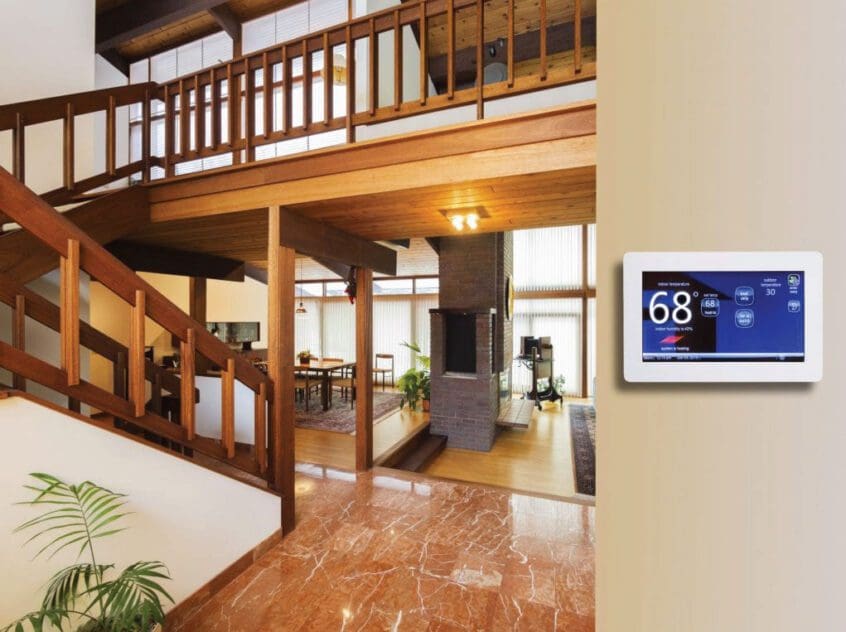
Keep the thermostat at 68°F during the day. This is the best temperature to stay comfortable without overworking your heating system.
- When You're Away from Home
Set your thermostat between 60 and 62°F when you’re away. This helps save energy while keeping pipes from freezing. If you’re away for more than a day, a temperature of 55°F is recommended.
- When You're Sleeping
Setting the temperature to 65°F promotes better sleep and can reduce your energy bill, especially when using flannel sheets or heated blankets.
Heat Pumps Operate Differently in Heating Mode
If your home uses a heat pump, the rules change slightly. These systems work more efficiently at steady temperatures, so large temperature fluctuations can cause them to work harder and reduce their efficiency.
It is generally not recommended to use a programmable thermostat with a heat pump for this reason. However, new programmable thermostats are now available that are specifically designed for heat pumps.
Either way, the best method to get the most out of your heat pump is to maintain a moderate setting.
What Temperature Should I Set My AC for Allergy Relief?
For optimal allergy control while maintaining energy efficiency, set your thermostat between 75-78°F during summer months. This temperature range allows your AC to run consistently enough to filter air and reduce humidity without excessive energy costs.
A programmable thermostat makes this even easier by maintaining stable conditions automatically—crucial for preventing the humidity fluctuations that encourage mold growth and dust mite populations.
Best Temperature to Set Thermostat to Save Money
Adjusting your thermostat is one of the most effective ways to save money on your energy bills, regardless of the season.
Below is a quick-reference guide with the ideal temperature ranges for both summer and winter:
| Season | At Home | Away | Asleep |
|---|---|---|---|
| Winter | 68°F | 60–62°F | 65°F |
| Summer | 78°F | 85°F | 78°F |
Energy-Saving Tips
You can stretch your HVAC system’s performance and reduce monthly bills with a few practical adjustments around the house. Here’s how:
- Install a Programmable or Smart Thermostat - A programmable thermostat automatically adjusts your home’s temperature based on your schedule. Many models allow you to control temperatures through your smartphone.
- Seal Windows and Doors - Drafty doors and leaky windows can let conditioned air escape. Use weather stripping, caulk, or thermal curtains to lock in comfort and avoid overworking your HVAC system.
- Maintain Your HVAC System - Dirty filters, clogged vents, and worn components all reduce efficiency. Scheduling regular maintenance appointments helps extend the life of your system and prevents costly repairs.

How to Use a Programmable Thermostat Effectively
Using a programmable thermostat correctly can significantly reduce your energy use without sacrificing comfort. But to reap the most benefits, it’s important to program it correctly.
According to ENERGY STAR, these best practices will help your programmable thermostat work for you, not against you:
- Install your thermostat away from heat sources.
Avoid placing your programmable thermostat near windows, skylights, fireplaces, lamps, or heating and cooling registers.
- Set the thermostat to energy-saving temperatures for extended periods.
Maintaining the same energy-saving temperature settings during the day when no one is home or while you are asleep is best.
- Use the “hold” button only when necessary.
Keeping your settings at a constant energy-saving temperature while you are away for more than a day is best. Use the “hold” button when going on vacation or away for the weekend.
- Don’t constantly adjust the settings.
Constantly adjusting the settings overrides pre-programmed settings. These frequent manual changes cause your system to work harder and increase energy costs.
- Use a programmable thermostat for each zone in your home.
Zoned heating and cooling systems work best when each area has its own programmed thermostat.
- Change your batteries annually.
Low battery levels can cause your system to stop following the programmed schedule or fail altogether. Upgrading to a smart thermostat can simplify this process.
Many models offer voice control, smartphone access, and even geofencing, which adjusts the temperature when you leave or return home.
Take Control of Your Comfort and Energy Costs with Chapman
Indiana weather is nothing if not unpredictable, but your indoor comfort doesn’t have to be. By understanding the recommended thermostat settings for summer and winter, you can enjoy a more energy-efficient home, lower utility bills, and better year-round comfort.
Whether you need a new programmable or smart thermostat, an HVAC system tune-up, or a zone control system for more targeted comfort, the experts at Chapman Heating, Air Conditioning, Plumbing & Electrical are here to help. We’ve served central Indiana for over 40 years, helping people stay comfortable in every season.
Take charge of your comfort and energy bills. Contact Chapman today for guidance and expert service.
Choosing a new heating and cooling system is a long-term commitment, so why not choose a system that will save you money and has a positive impact on the environment?
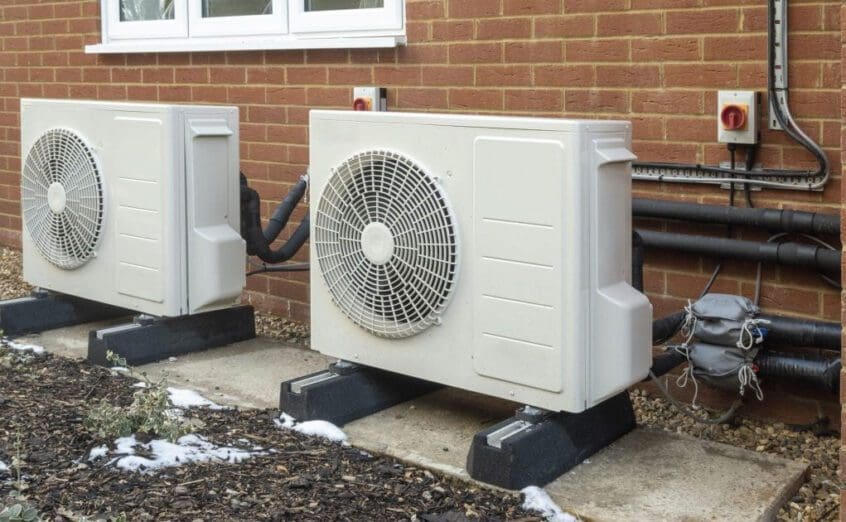
We are talking about heat pumps, which are a great HVAC system option. Heat pump units are an energy-efficient alternative to traditional furnaces and air conditioners and are continuing to grow in popularity across Central Indiana.
In our most recent blog, the HVAC technicians at Chapman Heating, Air Conditioning and Plumbing discuss what a heat pump is and why you might want to consider buying one for your Indianapolis home.
What is a Heat Pump?
Your traditional HVAC system uses a furnace in the winter and an air conditioner in the summer. A heat pump unit, though, can provide both heating and cooling for year-round comfort.
A heat pump works like an air conditioner in the summer by cooling your home by extracting the warm air in each room and replacing it with cool dry air. It runs in reverse in the winter to heat your home. Because heat pumps transfer heat rather than generate heat, they can provide equivalent space conditioning at a lower cost than a conventional heating or cooling appliance. During the winter, the system will be matched with a backup heating source, most often electric heat for those extremely cold days of winter.
Heat pumps have Seasonal Energy Efficiency Ratio (SEER) ratings like air conditioners and Heating Seasonal Performance Factor (HSPF) ratings for measuring heating efficiency. Higher SEER and HSPF ratings mean greater energy savings.
There are two common types of heat pumps; air-source and geothermal. An air-source heat pump transfers heat between your home and the outside air. Geothermal, or ground-source heat pumps, transfer heat between your home and the ground or the closest water source. Geothermal heat pumps have low operating costs and can be used in climates with more extreme weather.
Misconceptions About Heat Pumps
There is a misconception about heat humps that we would like to clear up. Heat pumps are not the enemy. Sometimes prospective homebuyers are turned off by the thought of using a heat pump instead of a traditional heating and cooling system, perhaps because they are not familiar with these systems. But heat pumps are actually a very efficient alternative to electric heat.
What might turn some people off about heat pumps is the initial cost of equipment, installation costs, the cost of electricity and the potential for increased maintenance costs. While any system will be expensive in the beginning, the return on investment is great with a heat pump. The compressors and refrigerant cycle of the heat pump will compound the productivity of your electric heat in the winter, giving you $2 to $3 of electricity for every dollar you spend.
Raising and lowering a heat pump thermostat will actually raise your bill because it forces the more expensive backup to come on when it would not normally be needed. Be sure to set your thermostat to a comfortable temperature, and don't move it to see increased energy efficiency.
Just like our air conditioners, many of our heat pumps have advanced features, such as two-stage compressors and variable-speed fan operation. These features not only improve the comfort level of your home, but can provide additional energy savings as well.
How Do I Maintain a Heat Pump?
Like all heating and cooling machines, you must perform regular maintenance to keep the machine running in tip-top shape. If you neglect to take care of your heat pump, it could end up costing you more money. You will need to clean or change the air filters once a month depending on the manufacturer's instructions.
Dirty filters and fans will reduce airflow. Most filters will last anywhere from 8 to 12 months. You should also have a professional heating and cooling technician look at your heat pump at least once a year to make sure everything is running smoothly. We typically recommend two tune-ups per year, once in the spring before cooling season and again in the fall before the heating season.
Contact Chapman for Heat Pump Installation Services
Heat pumps are an excellent way for you to save money no matter what season it is. It acts as a furnace and air conditioner, but you're only paying for one machine. It offers long-term cost savings and less dependence on fossil fuels. Your heat pump will supply lower-temperature air than a fossil-fueled furnace, so your heat pump will run for longer periods of time. It delivers steady heating with less energy consumption than the fossil-fueled competition.
Have we sold you on the benefits of having a heat pump installed in your Indianapolis or Central Indiana home? If you're interested in learning more about these energy-efficient systems or would like to schedule installation service, pick up the phone and call Chapman today, or contact us online.
Propane (LP) gas: You have this type if your gas comes from a tank located outside close to your house. Propane is stored as a liquid under pressure in tanks and cylinders. In most residential applications, propane is used as a vapor. When liquid propane changes into a gas vapor, it expands in volume. This means that even a small leak of liquid propane can result in a much larger quantity of propane vapor, which can be especially dangerous in a confined space. A chemical odorant has been added to propane to give it a distinct smell. Learn to identify this odor. Propane gas is heavier than air, so it will sink to the floor and spread. To check for the presence of propane, carefully smell all over a room, especially in low spots.
If you smell propane (LP) gas:
- Exit your home immediately.
- Propane gas can ignite easily. Do not light a match, start an engine, use a cell phone, or do anything that may create a spark.
- From a safe area, contact your propane supplier and call 911.
- If you are able, shut the propane gas supply off at the tank.
- Stay away from your home until you've been told that it is safe to return.
Natural gas: You have this type if you have a gas meter and pay a natural gas supplier or utility. A chemical odorant has been added to natural gas to give it a distinct smell. Learn to identify this odor.
If you smell natural gas:
- Exit your home immediately.
- Do not light a match, start an engine, use a cell phone, or do anything that may create a spark.
- From a safe area, contact your gas company or call 911.
- If you are able, turn the gas off at the meter.
- Stay away from your home until you've been told that it is safe to return.
Chapman Heating, Air Conditioning, and Plumbing, carries a full line of high efficiency furnaces. Contact us to recommend the best services to your home
With a traditional heating and cooling system, if you wanted to save more, you had to use less. But a Hybrid Heat system combines the benefits of intelligent control for both gas and electric heating to create an intuitive system that can actually react to changing conditions.
No matter what the temperature is outside, a Hybrid Heat system will automatically select the fuel source most efficient for your home, which means you'll stay warm in the winter, cool in the summer and save money all year long.
To design a Hybrid Heat system for your home, we professionally match one of our heat pump units with a natural gas furnace. Contact us to see how much energy you can save over your existing system.
Looking for home heating system installation contact Chapman Heating, Air Conditioning, and Plumbing, today
- Check the settings on your thermostat. Make sure the temperature control selector is set below the current room temperature, and the system switch is on the COOL or AUTO position. The fan switch should be set to ON for continuous airflow or AUTO if you want the blower to operate only while the heat pump is operating.
- Try to get the heat pump to turn on by lowering the thermostat to its lowest temperature setting.
- If the air flow out of your registers seems low, check the air filter. An extremely dirty air filter can block air flow.
- Make sure all registers are open and not obstructed.
- Check the power disconnect switch by each unit (outdoor and indoor).
- Check the fuse/breaker at the electrical panel for both the outdoor and indoor unit.
- If the problem persists, please call us.
Have questions about your sump pump and heating system give Chapman Heating, Air Conditioning, and Plumbing, your source for qualified hvac repair and installation contractors
Without warranty coverage, a breakdown can mean significant expense in parts, labor, or both. However, with one of our service agreements, you avoid that unexpected significant expense. While no warranty can guard against every possible problem, we can explain the broad range of protection our service agreements afford.
Looking for home heating system installation contact Chapman Heating, Air Conditioning, and Plumbing, today
SEER, AFUE and HSPF are all measures of energy efficiency. Air conditioners may look similar, but their Seasonal Energy Efficiency Rating (SEER) can vary widely. Higher SEER numbers save more money spent on electricity. A 13 SEER air conditioner, the EPA "current minimum standard", uses 23% less energy than a 10 SEER unit (EPA standard up until Jan. 2006). Even though 13 SEER is the minimum efficiency available, we currently offer a line of air conditioners that start at 13 SEER and go all the way up to a 21 SEER . Depending on your average usage, higher SEER air conditioners can significantly reduce your electric bill.
Heat pumps have SEER ratings like air conditioners and Heating Seasonal Performance Factor (HSPF) ratings for measuring heating efficiency. Higher HSPF ratings mean greater energy savings. The HSPF scale range is 7.5 to 13.0.
Today's new high-efficiency furnaces can save up to 50% in operating costs over a ten-year-old furnace. Many 1990 and earlier model furnaces have Annual Fuel Utilization Efficiency (AFUE) ratings of 65% or less. The minimum AFUE rated furnace that can be sold in the United States as of May 1, 2013 is 80% in southern states and 90% in northern states.
Our current product offering starts at this minimum AFUE rating and goes all the way to a very efficient 98.3% AFUE rating. Depending on your average usage, higher AFUE rated furnaces can significantly reduce your gas bill.
Looking for home heating system installation contractor contact Chapman Heating, Air Conditioning, and Plumbing, today
A matched system is important for a variety of reasons. One is comfort. When all your components are properly sized to your home, you can control exactly how much heating or cooling you need so you can relax. Also, a properly sized matched system enables every component to perform as designed, meaning proper cycle times are maintained, humidity is controlled, and system sound is minimized.
Another reason matched systems are important is efficiency. Most systems people buy are too large for their homes, which uses more energy than needed for your home. A matched system outlined by a dealer who has completed a load calculation for your home provides just the right amount of heating and cooling you need so you get the most value for your utility dollar.
Looking for home heating system installation contact Chapman Heating, Air Conditioning, and Plumbing, today